

 Login
Login



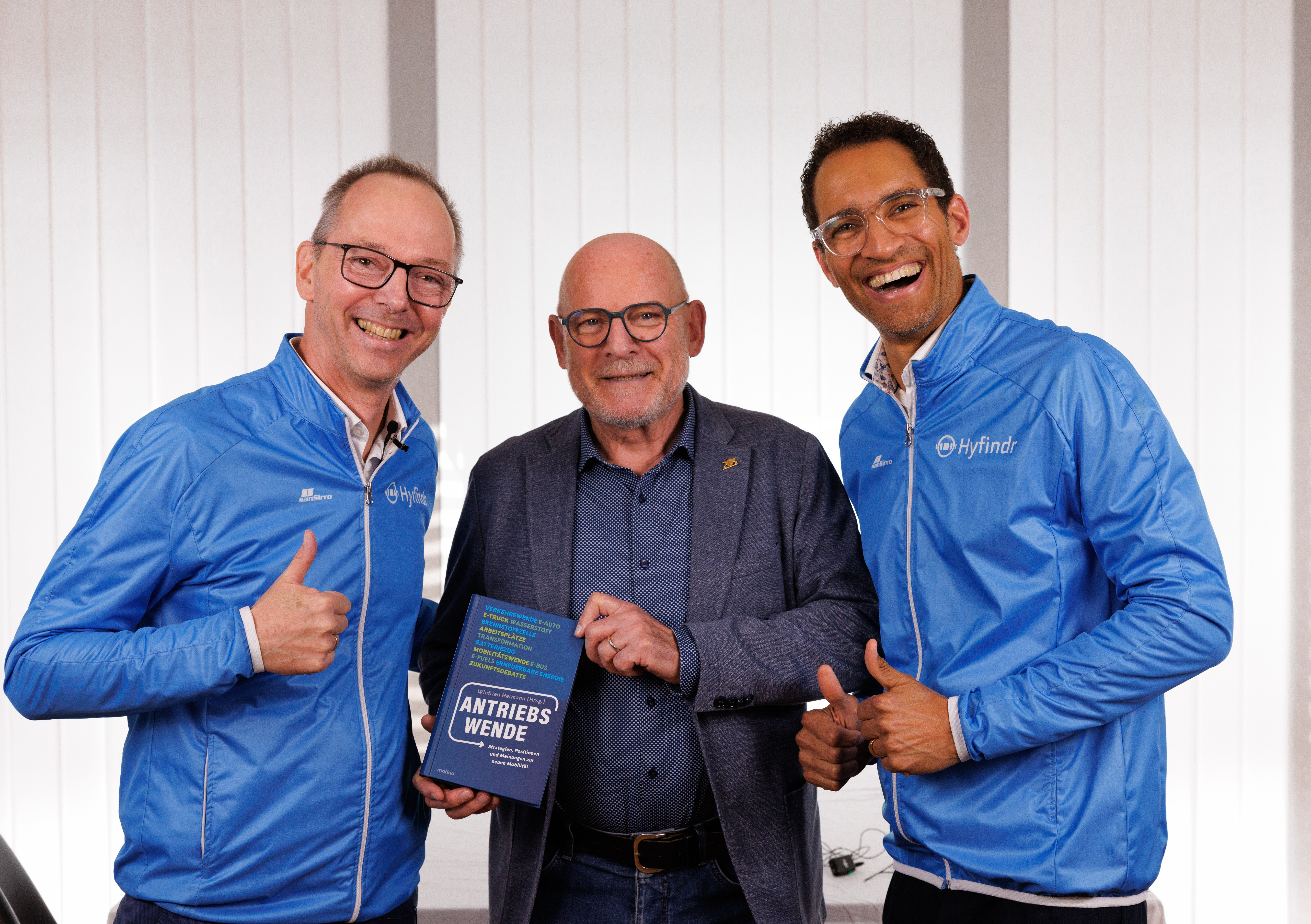
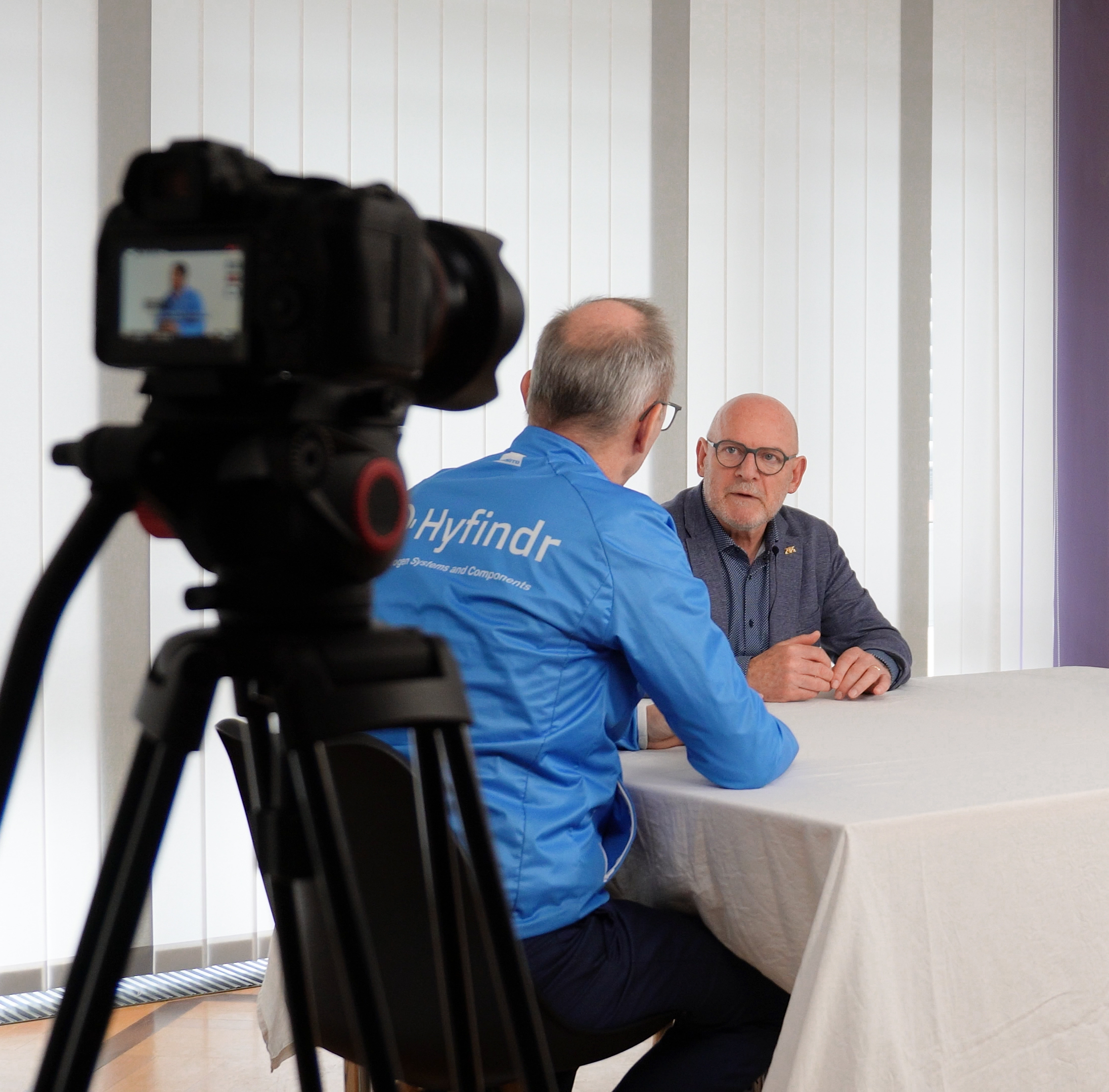
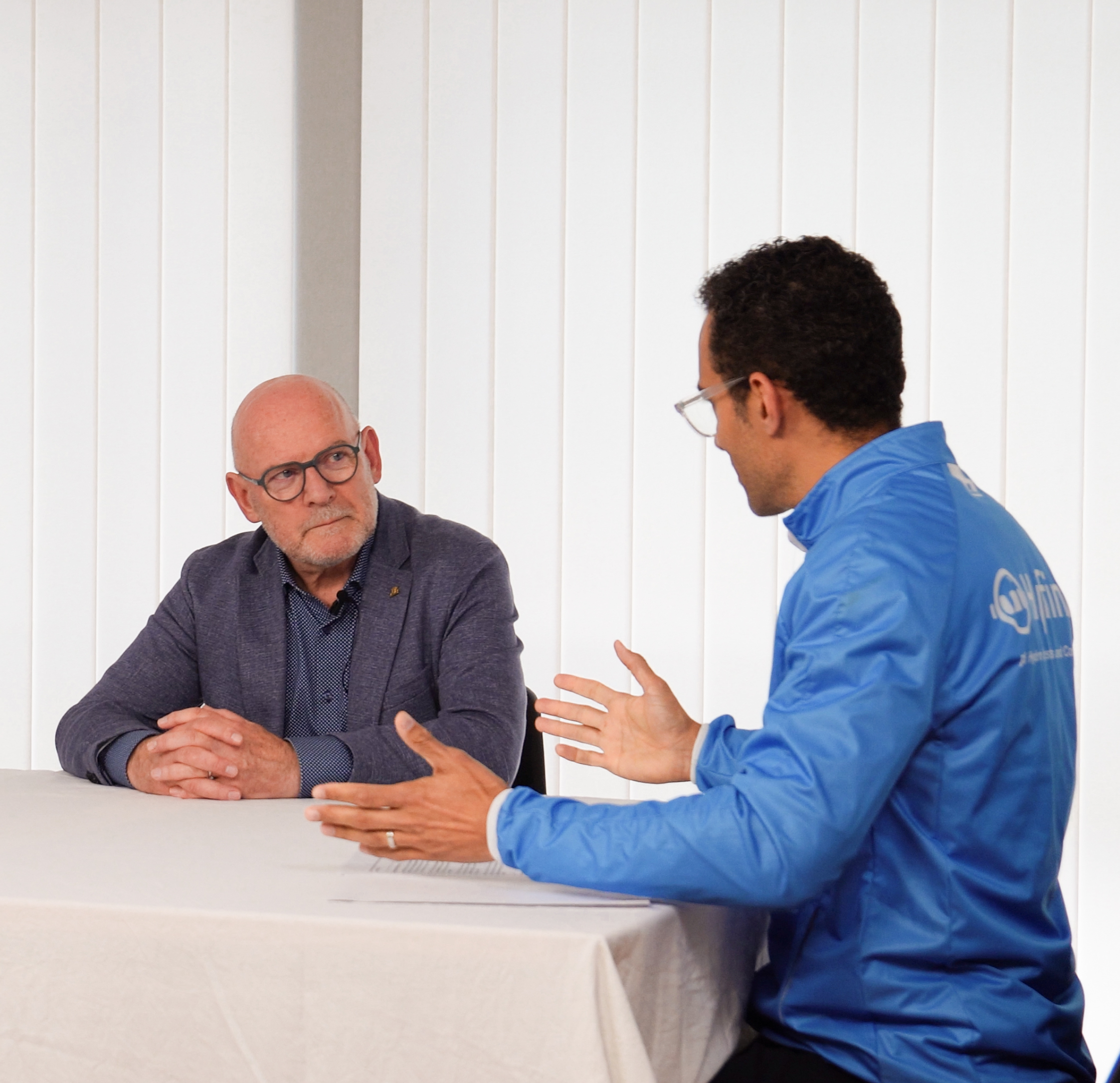
In this exclusive interview, Dr. Björn Lüssow and Mr Steven Oji, Managing Directors of Hyfindr GmbH, speak with Mr Winfried Hermann, Minister of Transport for Baden-Württemberg, about the current status of the hydrogen industry, the state’s strategic initiatives, and the challenges and opportunities on the road to climate-neutral mobility.
Current status and significance of hydrogen in Baden-Württemberg
Björn Lüssow: Minister, let's start with a look at the current status: How do you see the hydrogen industry positioned in Baden-Württemberg? How important is hydrogen mobility, especially in your federal state, which is also an important automotive location?
Winfried Hermann: Demand for hydrogen is high – many companies want to use this clean energy source. At the same time, high costs, EU regulations and limited availability are slowing down the ramp-up. In the transport sector, hydrogen will play a role in long-distance heavy goods transport, but not in passenger car transport, where the trend is clearly towards battery electric drive. Baden-Württemberg is a European leader in fuel cells, with leading manufacturers such as Bosch, EKPO and Cellcentric and strong suppliers such as ElringKlinger and Mahle. To ensure that our companies remain competitive, politicians must take action and create markets.
Björn Lüssow: As Minister of Transport, what concrete steps are you taking to promote hydrogen mobility in Baden-Württemberg?
Winfried Hermann: My clear goal is climate-neutral mobility in Baden-Württemberg – and from Baden-Württemberg for the world. Hydrogen and fuel cells are indispensable for this. We must now create specific applications and bring fuel cells onto the road. To this end, we are promoting the development of hydrogen corridors, for example between Heilbronn and Rotterdam, where trucks with fuel cells or hydrogen combustion engines can travel safely over long distances. I am working closely with partner regions, the federal government and the EU to achieve this – because Baden-Württemberg cannot make hydrogen mobility a success on its own.
Hydrogen in various transport sectors
Steven Oji: In passenger transport, the race between purely battery-electric vehicles and fuel cell vehicles seems to have been decided in favour of battery-electric vehicles on the passenger car side. Do you share this assessment, or do you still see potential for fuel cell vehicles in the passenger car segment?
Winfried Hermann: Battery drive is unbeatable for passenger cars today: it is becoming increasingly affordable and, with modern systems, also enables long-distance journeys. Chemical energy sources such as hydrogen play a role in the passenger car sector at most where self-sufficiency is necessary – for example, in disaster control or in safety-critical operations. These niches are important, but they are not the main drivers of passenger car development.
Steven Oji: What about heavy goods transport? Hydrogen is often cited as a promising solution here. What developments are you seeing in this area in Baden-Württemberg?
Winfried Hermann: Batteries dominate distribution transport because they meet all the requirements for the last mile. Battery-electric trucks are now also available for long-distance transport. In the long term, however, I see potential for hydrogen fuel cells: the short refuelling times reduce breaks, and fuel cells relieve the burden on the charging network – which is particularly important on busy motorways. In regions without comprehensive charging infrastructure, the only options for climate-friendly long-distance transport are reFuels, hydrogen derivatives, and hydrogen for direct combustion.
Steven Oji: Deutsche Bahn is running a pilot project in Tübingen to convert diesel locomotives to hydrogen. What role do such initiatives play in the decarbonisation of rail transport in Baden-Württemberg, and do you support these efforts?
Winfried Hermann: Where electrification via overhead lines is not economically viable or cannot be implemented quickly, we need alternative drive systems. Battery and hydrogen trains are the ideal complement to conventional electrification on routes with medium train traffic. A pilot project shows that hydrogen trains work technically – but the trend is towards battery power. Nevertheless, we welcome and support such test operations in order to bring the technology to series production readiness.
Infrastructure and framework conditions
Björn Lüssow: A critical issue for the acceptance of hydrogen vehicles is the filling station infrastructure. How many hydrogen filling stations are there currently in Baden-Württemberg, and how many of them are already suitable for refuelling lorries? What other locations are in the planning stage or under construction?
Winfried Hermann: There are currently nine hydrogen filling stations in operation in Baden-Württemberg, six of which can also refuel commercial vehicles such as buses or lorries (one is not open to the public). Six more stations are in the planning or construction phase. The key to success is not just the sheer number, but well-thought-out route and network planning – for example, every 50 kilometres along important corridors such as Heilbronn–Rotterdam, so that trucks can be reliably supplied.
Björn Lüssow: The Alternative Fuels Infrastructure Regulation (AFIR), which came into force in 2024, is intended to accelerate the expansion of the infrastructure. What impact will this regulation have on the development of the hydrogen infrastructure in Baden-Württemberg?
Winfried Hermann: The AFIR sets binding EU targets for hydrogen filling stations: by the end of 2030, a minimum number of publicly accessible stations for cars and light and heavy trucks must be available in cities and along the core network. It creates planning security and technical standards, thus supporting the ramp-up of H2 vehicles. For Baden-Württemberg, this is an important framework for designing the infrastructure in line with demand.
Björn Lüssow: In your opinion, what is necessary to accelerate the expansion of the hydrogen infrastructure and the wider introduction of hydrogen mobility? Where do you see the responsibility of politics, the economy and also individual citizens in this regard?
Winfried Hermann: Above all, we need affordable green hydrogen – currently, the necessary production capacity is lacking. Only large, reliable customers such as H2-ready gas-fired power plants can create solid business models and invest in networks, storage facilities and hubs. This forms the basis for mobility applications. Everyone is needed:
- Politicians, especially the EU, must create regulatory and planning certainty and support infrastructure projects and H2 power plants.
- The business community should strategically anchor climate protection and transparently outline the investments that are necessary.
- Citizens can support regional projects by accepting wind and solar power plants. In this way, we can jointly secure supply, climate protection and Baden-Württemberg as a business location.
Björn Lüssow: Many large oil companies are still cautious or slow to act in the field of hydrogen production and infrastructure. Can't we hold these companies more accountable for accelerating the transition to alternative fuels?
Winfried Hermann: Oil companies invest where it currently pays off. They should invest more in the future, because the end of the fossil fuel era is in sight. We need ambitious quotas for renewable fuels, e.g. in air transport, and attractive incentives, for example via the GHG quota, to make investments in green molecules worthwhile. Refineries and other corporate facilities should be made usable for green hydrogen – this will save us time, capital and expertise. Ultimately, an effective CO₂ price will determine the economic viability of alternatives.
Competition, incentives and the role of start-ups
Steven Oji: Competition between the federal states can drive innovation. In your opinion, how do the federal states in Germany compete with each other when it comes to developing the hydrogen economy? Are there similar discussions here as there are regarding the connection of ICE train stations, for example, regarding the connection of hydrogen pipelines?
Winfried Hermann: The transmission networks for hydrogen are defined by law as a core network. Competition between the federal states is particularly evident in regional production: large coastal plants feed into the grid, while smaller electrolysers are being built in the south close to customers. The federal states also compete for skilled workers in H2 technologies. Baden-Württemberg has a strong position here thanks to its research landscape and five hydrogen research centres. But we lack cheap wind energy. That is why the transmission of electricity from the northern wind farms is so important.
Steven Oji: With regard to achieving zero emission targets in mobility, do you think it makes sense to introduce bonus systems for your employees or even for yourself if certain targets are achieved, or, on the contrary, to impose financial consequences if they are not achieved? What do you think of this idea as an incentive?
Winfried Hermann: At the ministry, we don't need material incentives for climate-friendly mobility. We have a clear legal mandate. Our employees at the Ministry of Transport are highly motivated to work on the transport transition. They serve as role models and take this role seriously. For example, we were at the forefront of City Cycling as the Ministry of Transport. We support climate-friendly transport – for example, through JobTicket and JobBike. Positive motivational incentives lie in the shared task of achieving our climate goals.
Steven Oji: We see time and again that start-ups are often the driving force behind innovation. Shouldn't we promote them rather than large corporations, which are happy to accept subsidies but, given their billions in profits, may not really need them?
Winfried Hermann: Funding from normal programmes serves the public interest and is awarded in transparent allocation procedures – to those who best fulfil the funding purpose. Start-ups and established companies compete on an equal footing here. This ensures that the most innovative and suitable project is funded, regardless of the size of the company.
Looking to the future and international developments
Björn Lüssow: In China, there are now hydrogen trucks that are comparable in price to a C-Class. Doesn't that make you fear for Stuttgart as a centre of automotive manufacturing and the competitiveness of German industry?
Winfried Hermann: With Cellcentric, we have a fuel cell manufacturer in Baden-Württemberg that is on a par with its Chinese competitors. China does provide massive subsidies, but in the long run, these prices are not sustainable for the industry. Nevertheless, we must support our companies so that they can use and further develop their technologies in the domestic market. Short-term economic considerations must not jeopardise the potential of fuel cells on the global market.
Björn Lüssow: In the context of international developments and competition, do you consider tariffs to be a suitable solution for protecting domestic industry and promoting the ramp-up of hydrogen?
Winfried Hermann: Tariffs protect existing industries in the short term, but they make products more expensive and place a burden on consumers. In the case of hydrogen, which is already expensive, this would tend to slow down the ramp-up. We need both imports and domestic production for a functioning market. Protectionism is not a sensible solution – instead, we are focusing on strong European cooperation in business, research and politics.
Steven Oji: Finally, Mr Hermann, what would you personally like to achieve in terms of hydrogen mobility in Baden-Württemberg over the next 12 months? What is your most important goal?
Winfried Hermann: My most important goal is to work with all stakeholders to pave the way for hydrogen corridors for heavy goods transport. By then, I would like to have established all the necessary formats and partnerships so that the economy has planning security and can succeed in this long-term endeavour.
Steven Oji: Minister, thank you very much for this interesting and insightful conversation!
Date: 31st July 2025
Location: Hyfindr Office, Stuttgart-Degerloch, Germany